Site-specific visual concepts for architecture, interiors and public space — developed for architectural practices, companies, cultural institutions and public-sector projects.
Colour, proportion and graphic clarity — developed as a consistent visual method.
The medium changes. The context remains.
INTERVENTIONS
Small gestures. Clear intentions.
The earliest BRAND works approach architecture through restraint. Colour, edge and interval answer what is already there — windows, residual walls, found surfaces. These interventions do not yet form a closed system. They establish a method: precision over spectacle, structure before motif. Further early works will join this chapter as the exhibition continues to take shape.
First Brand Facade
2020 · approx. 90 m²
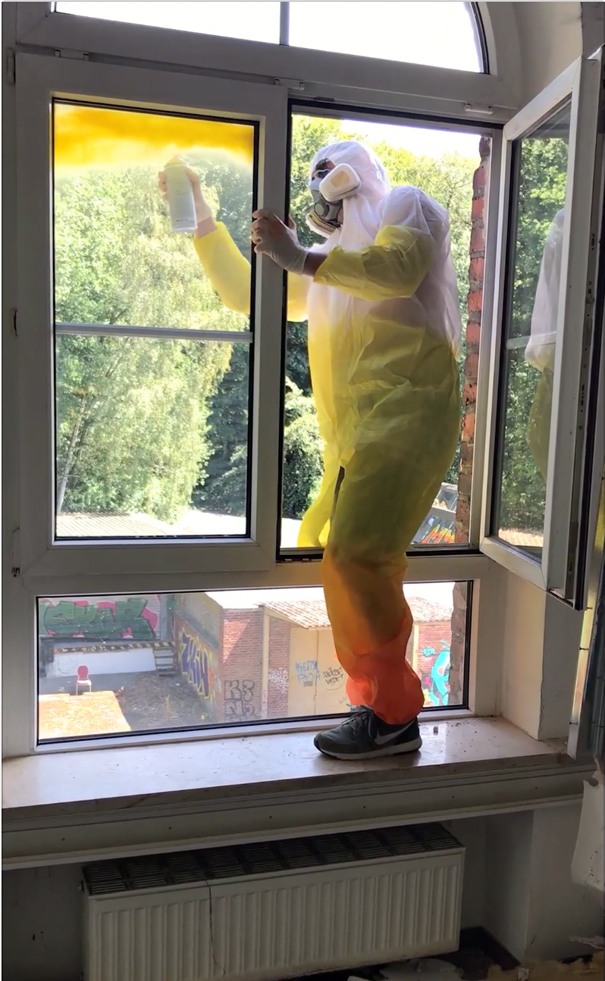
A window facade becomes the first clear statement. Existing openings organise the image; colour follows construction rather than covering it.
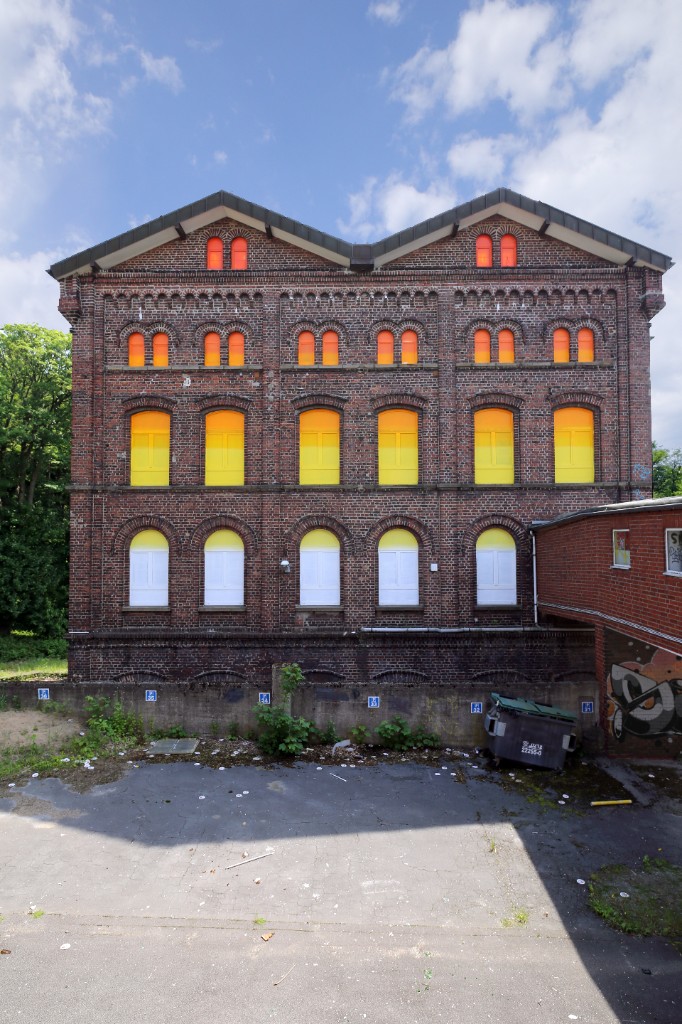
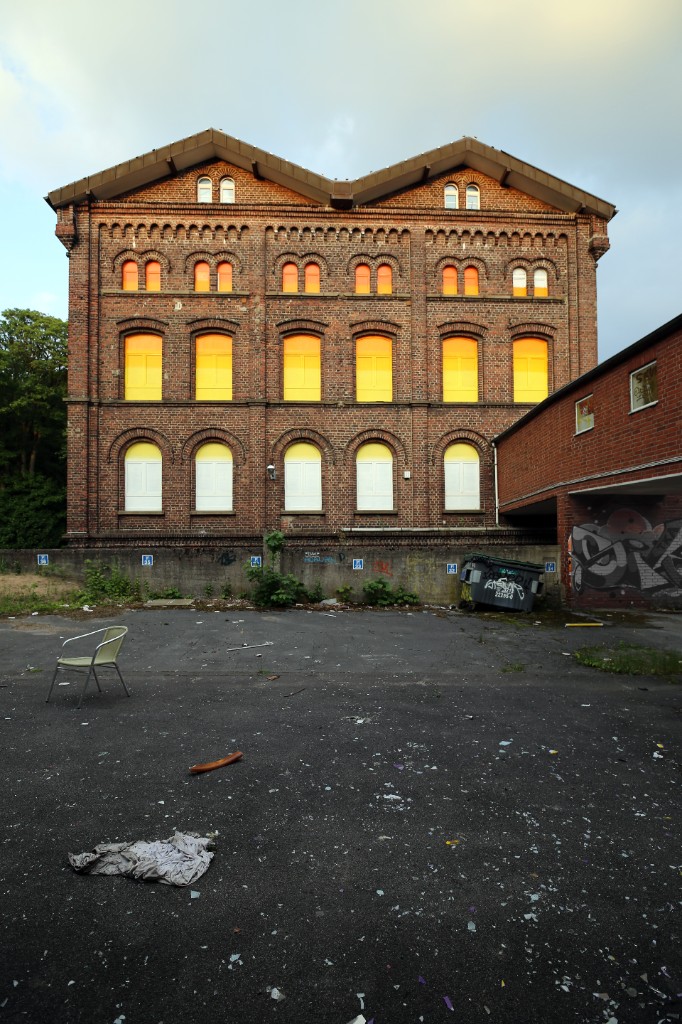
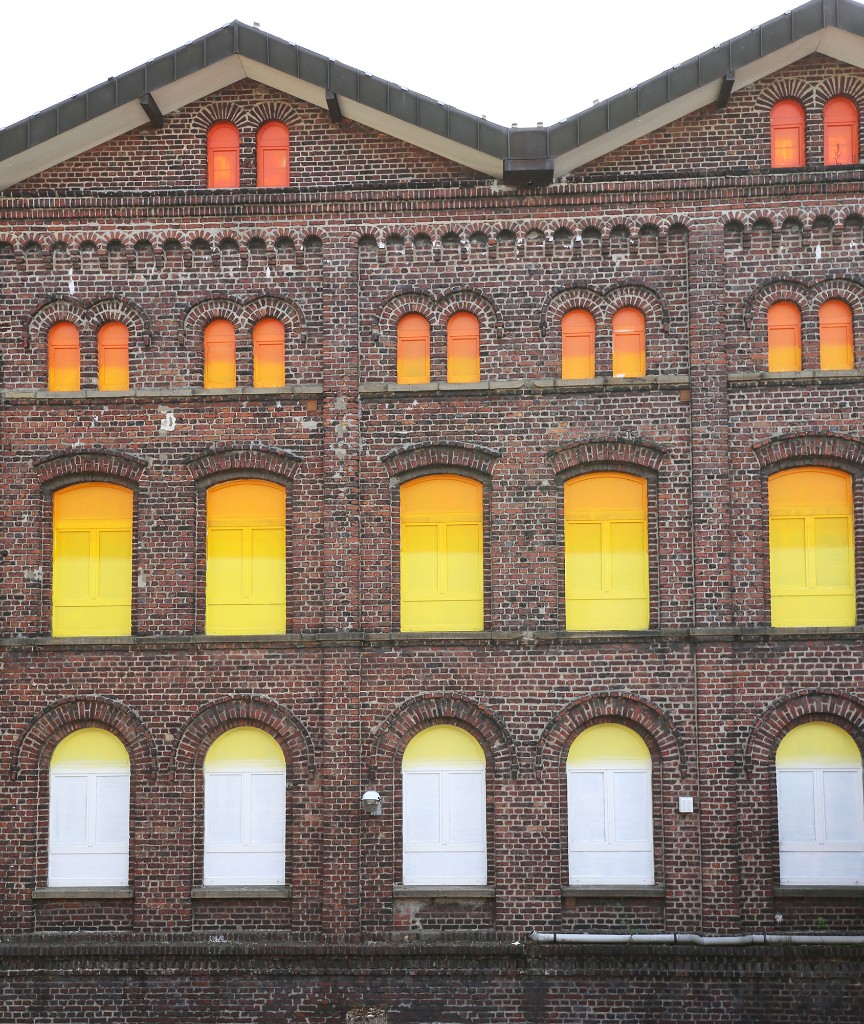
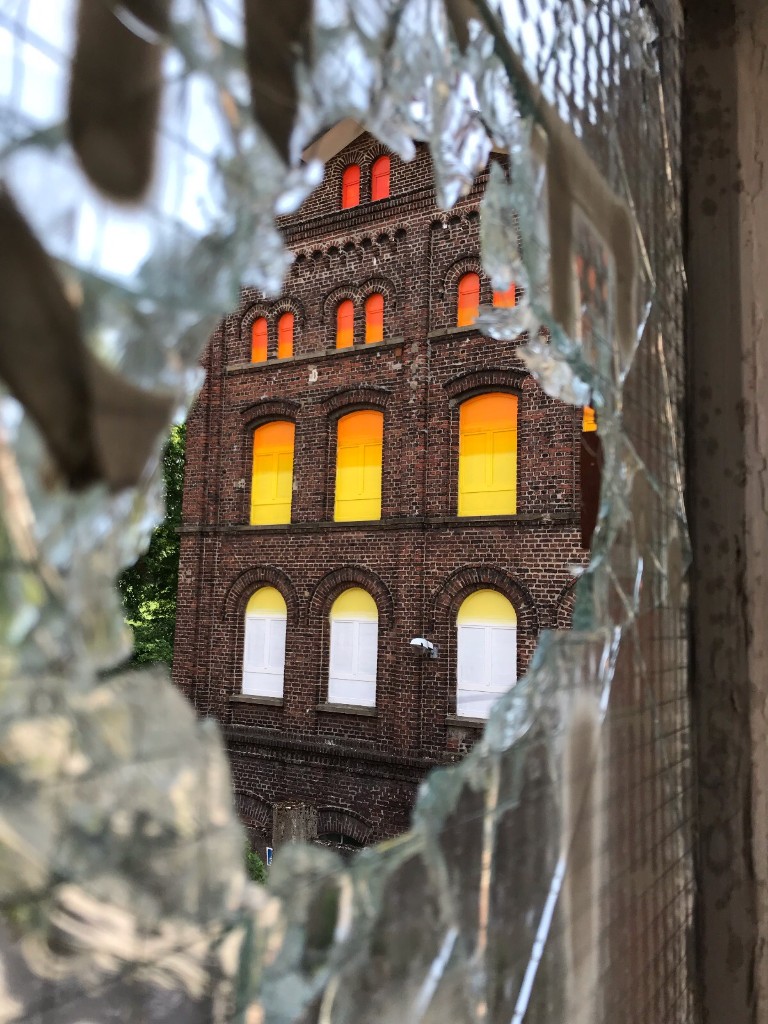
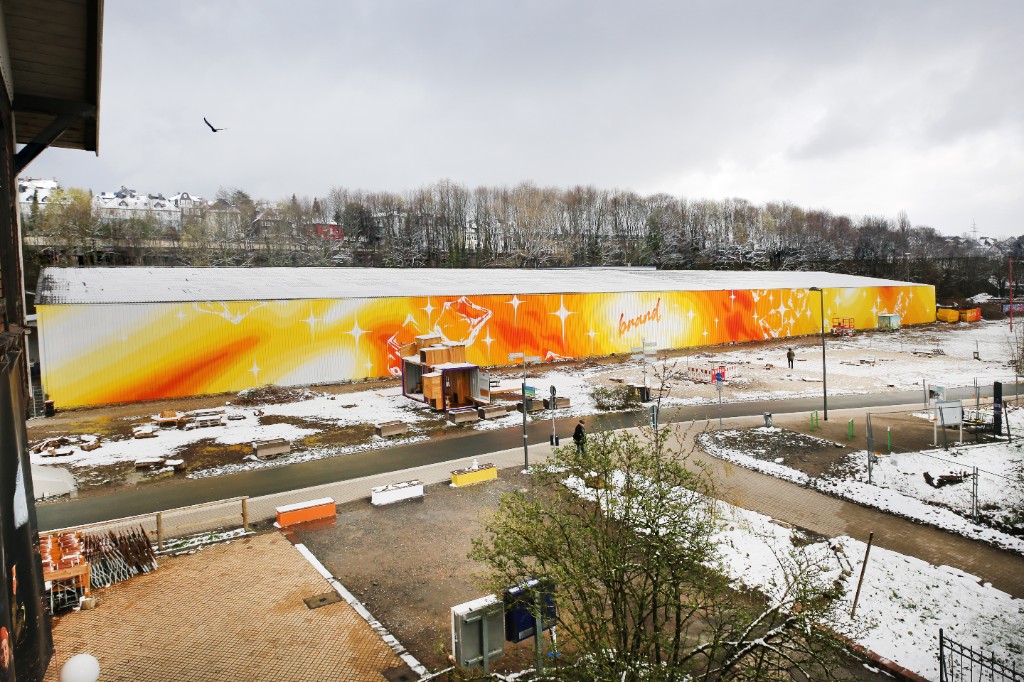
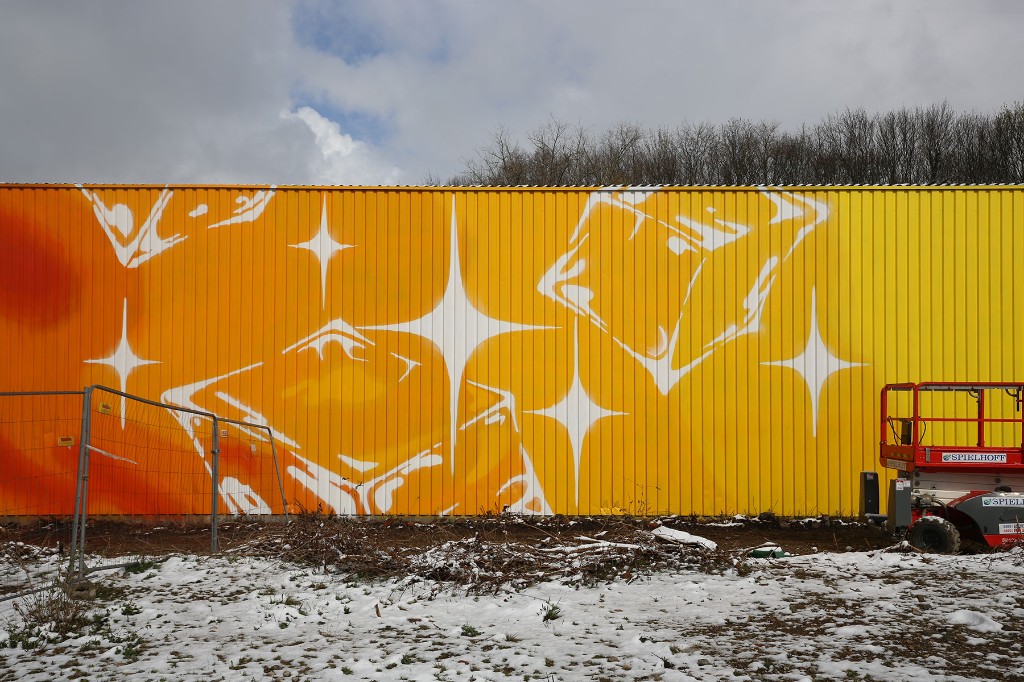
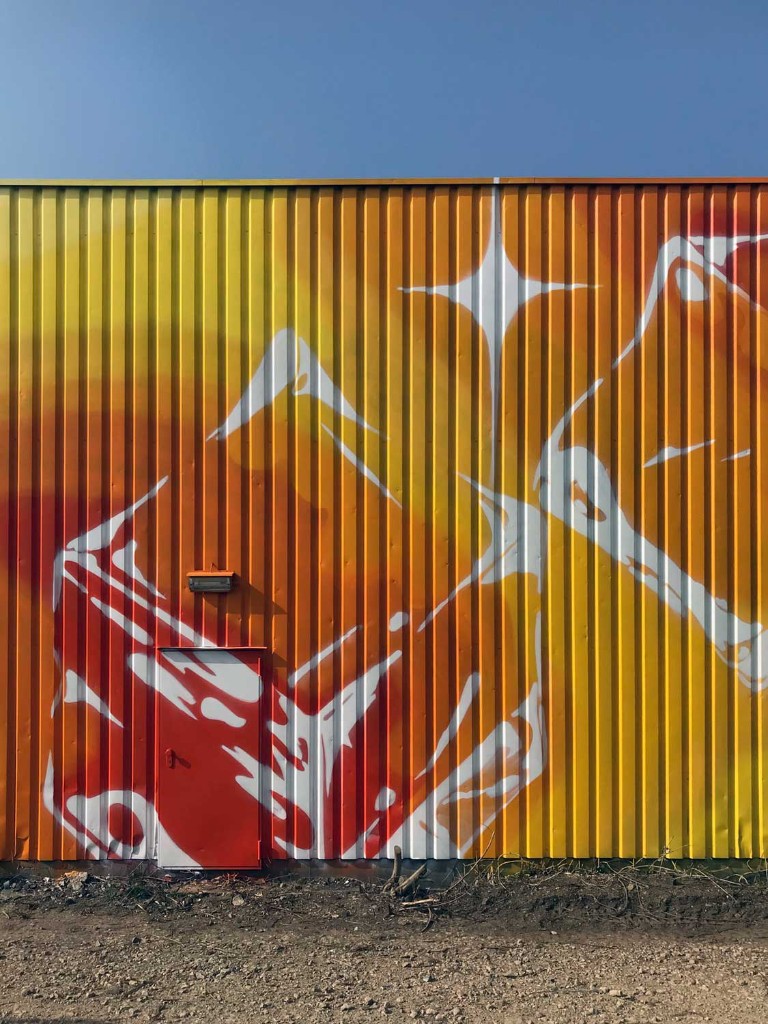
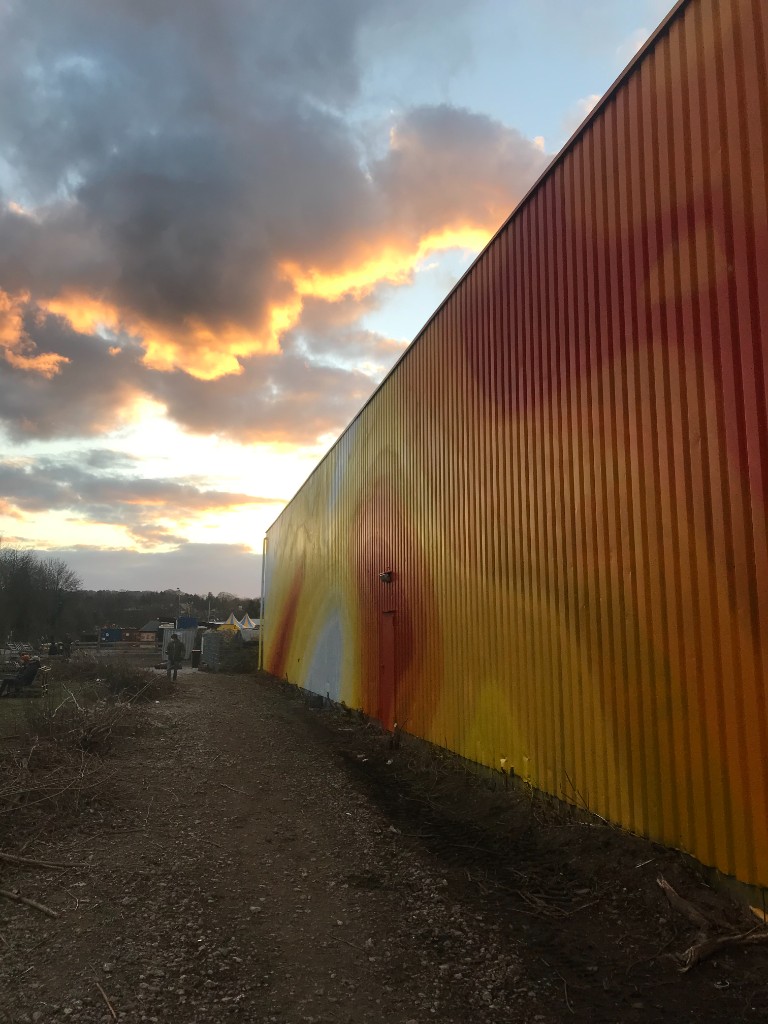
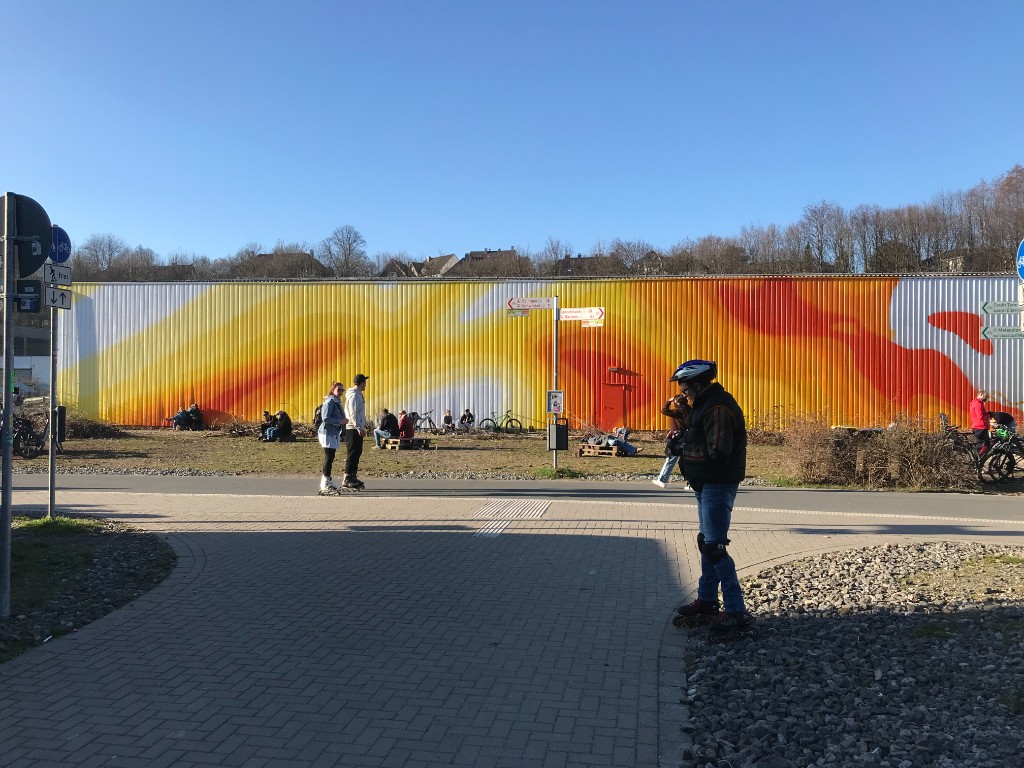
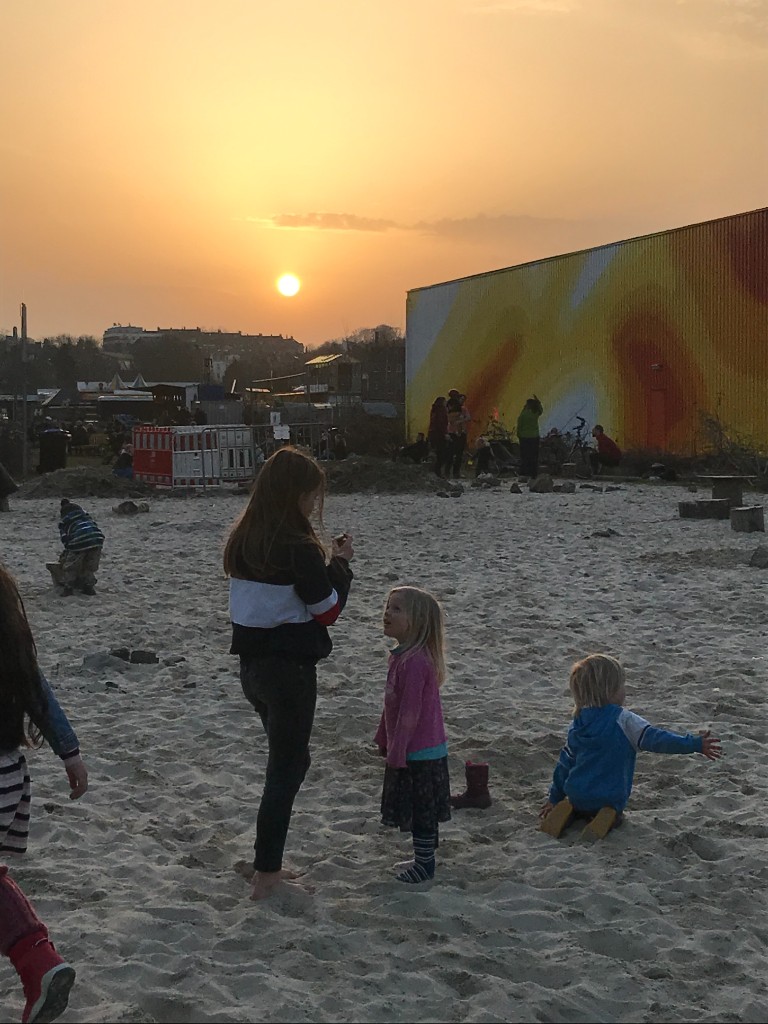
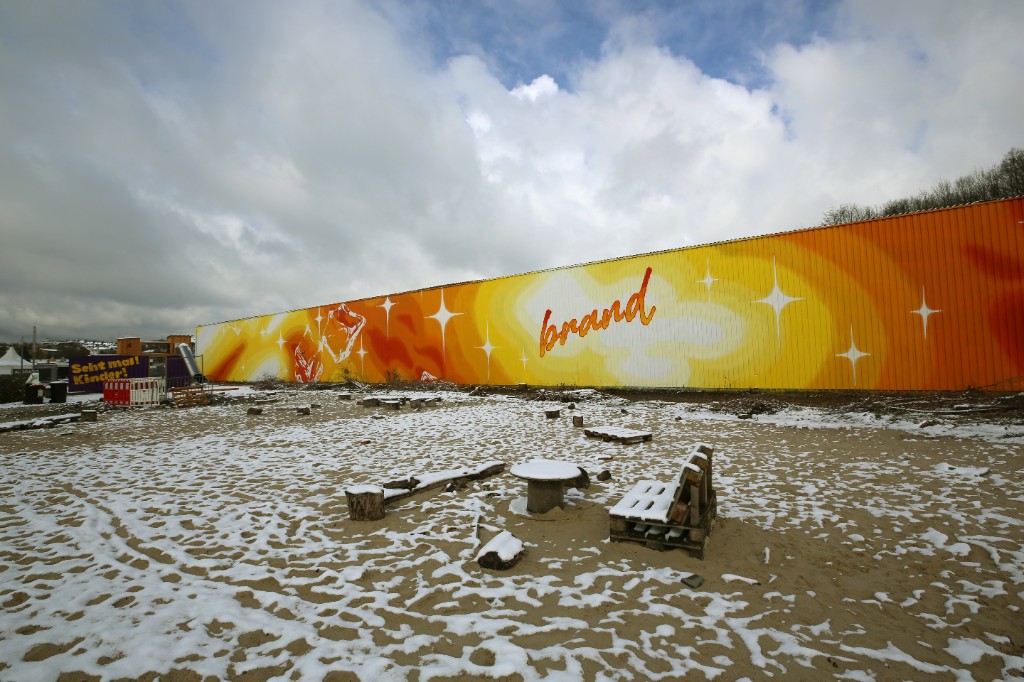
From repeated decisions a language becomes readable. Brandhalle marks this shift: white, yellow and orange no longer appear as isolated gestures, but as a proportional field held by industrial architecture. Process, weather and everyday use remain visible. The hall is less a conclusion than a threshold — the point where method turns into system.
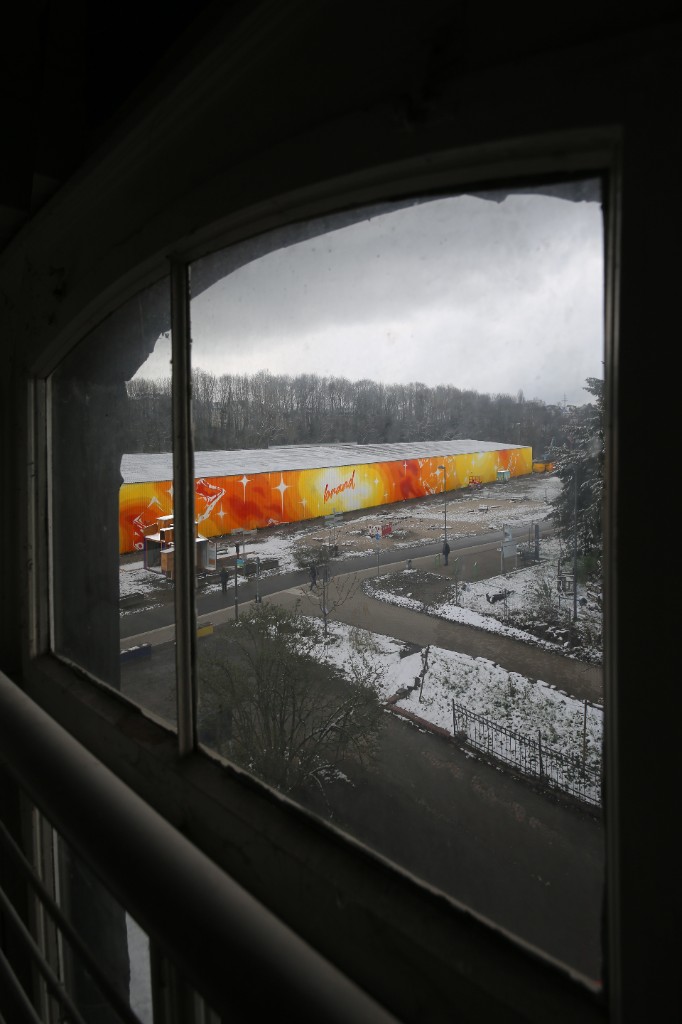
Brandhalle — Mirker Bahnhof / Utopiastadt
Wuppertal · 2024 · approx. 1,000 m²
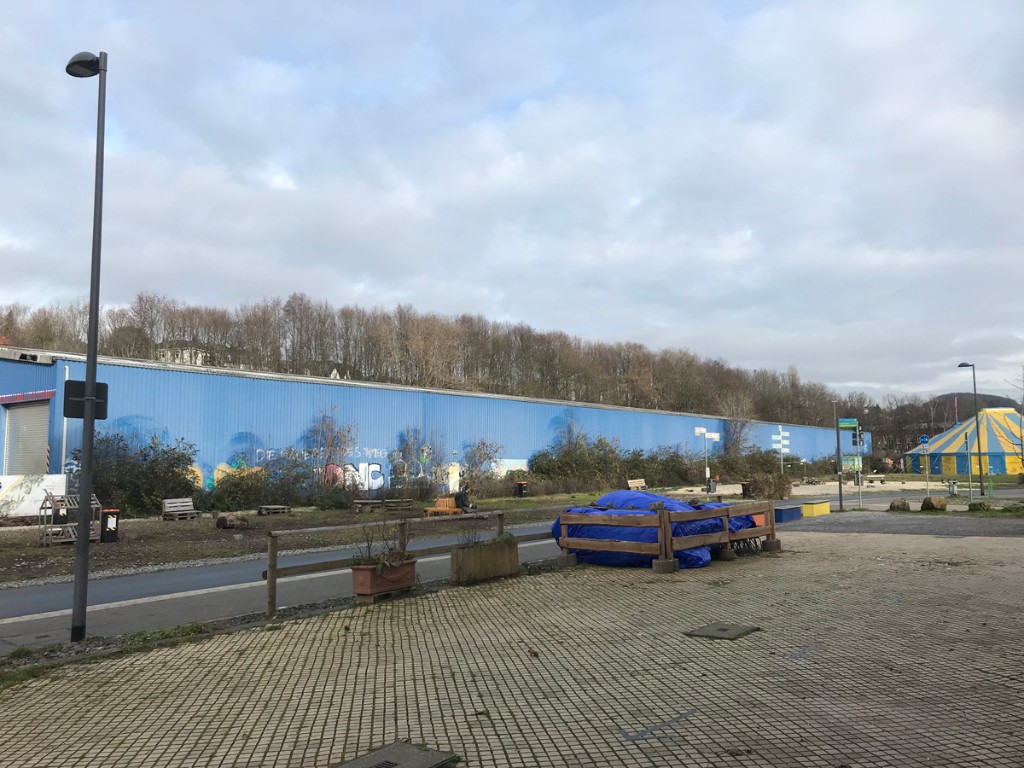
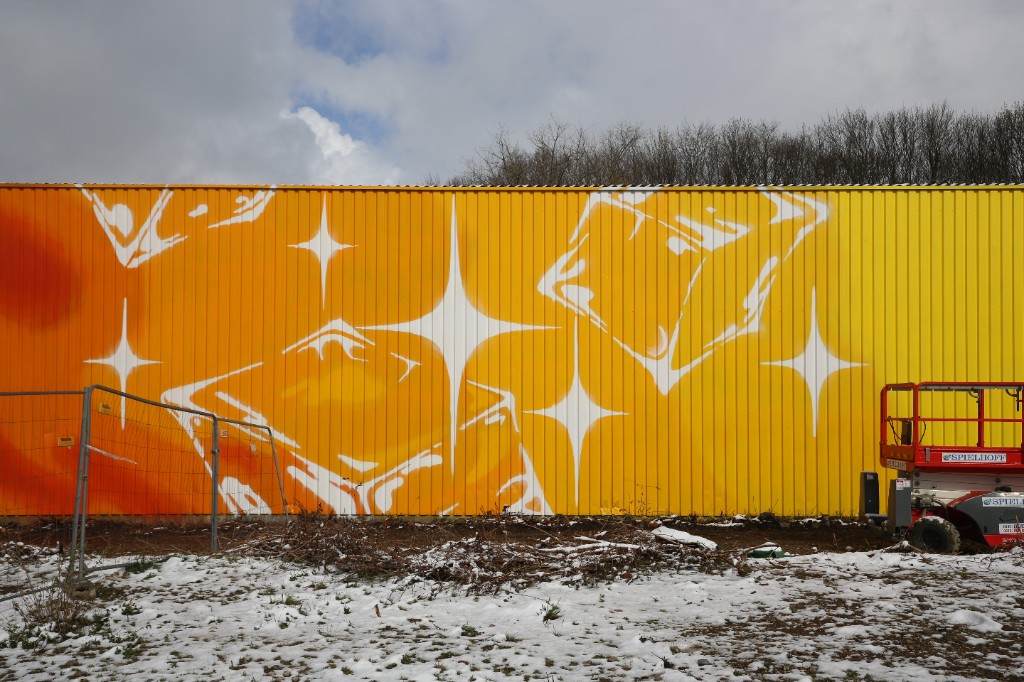
Colour held across an industrial hall. The former blue volume at Utopiastadt turns into a proportional field — white, yellow, orange — developed with the building, not applied onto it.
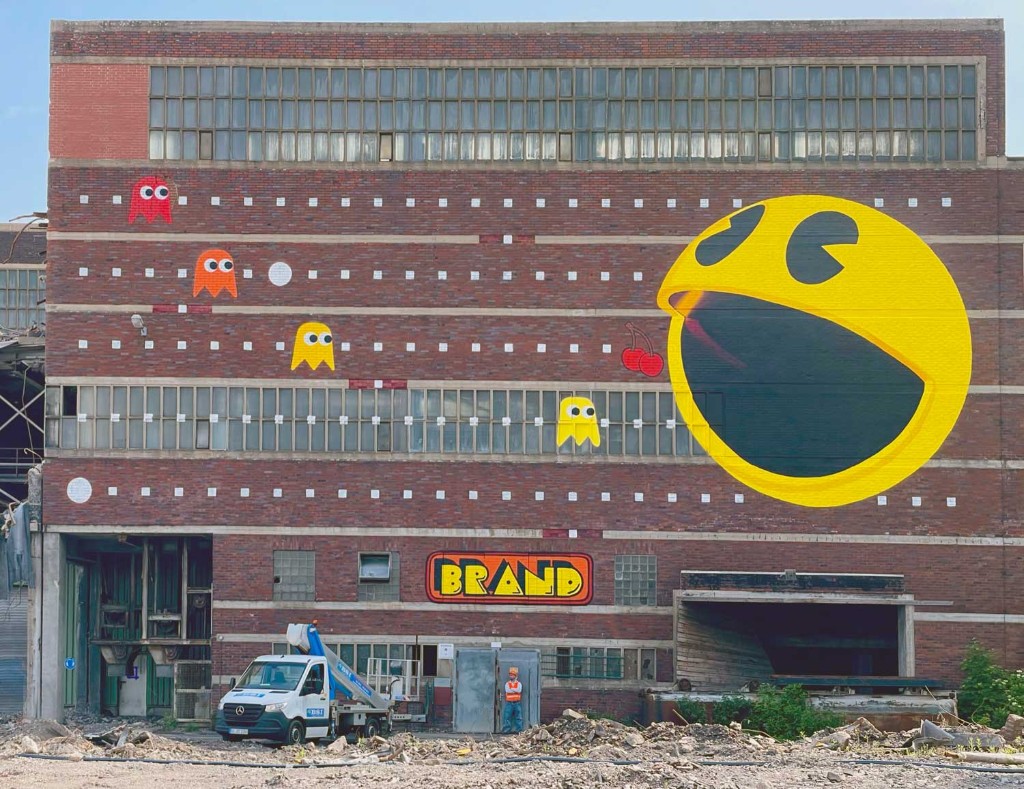
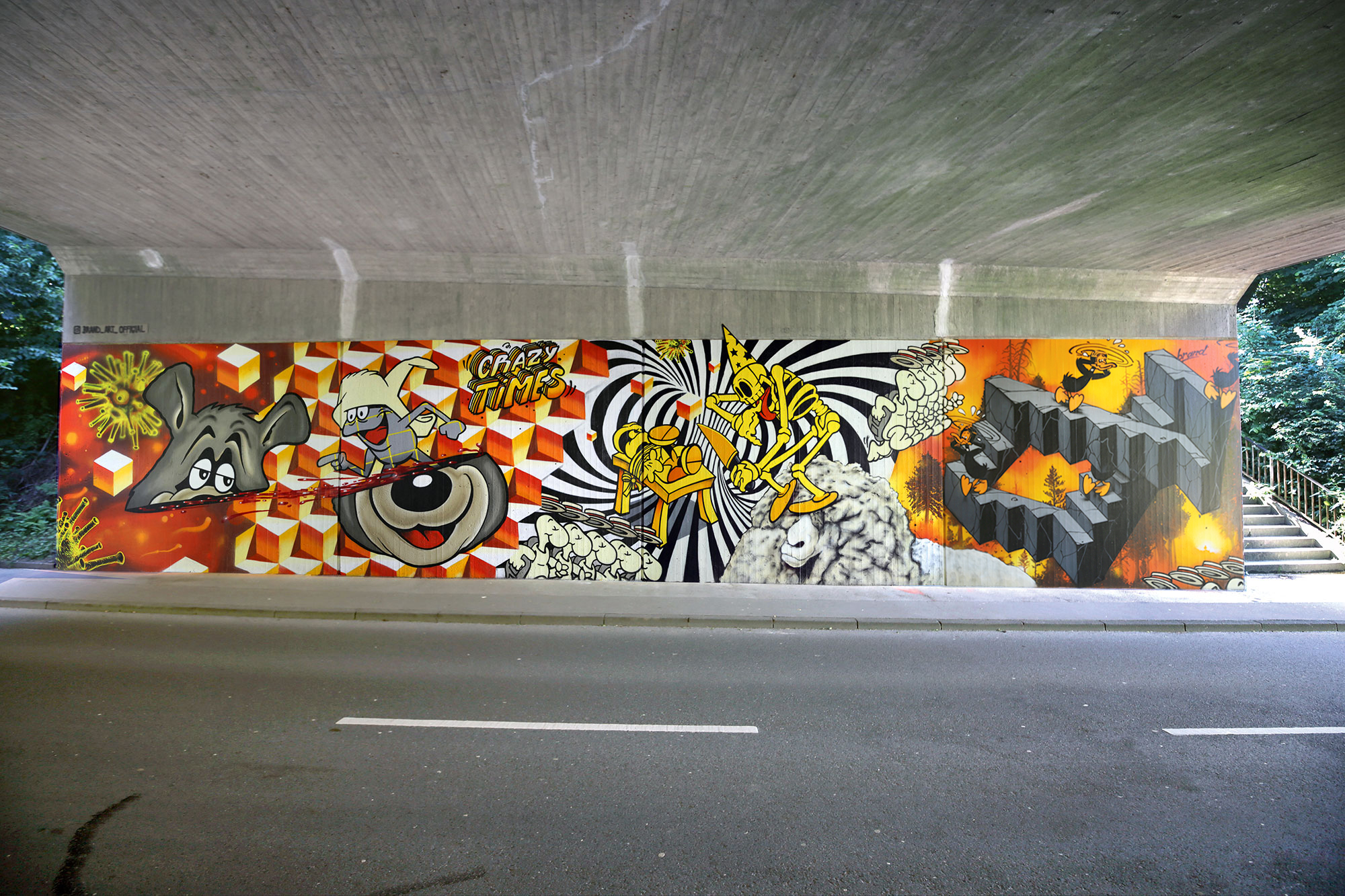
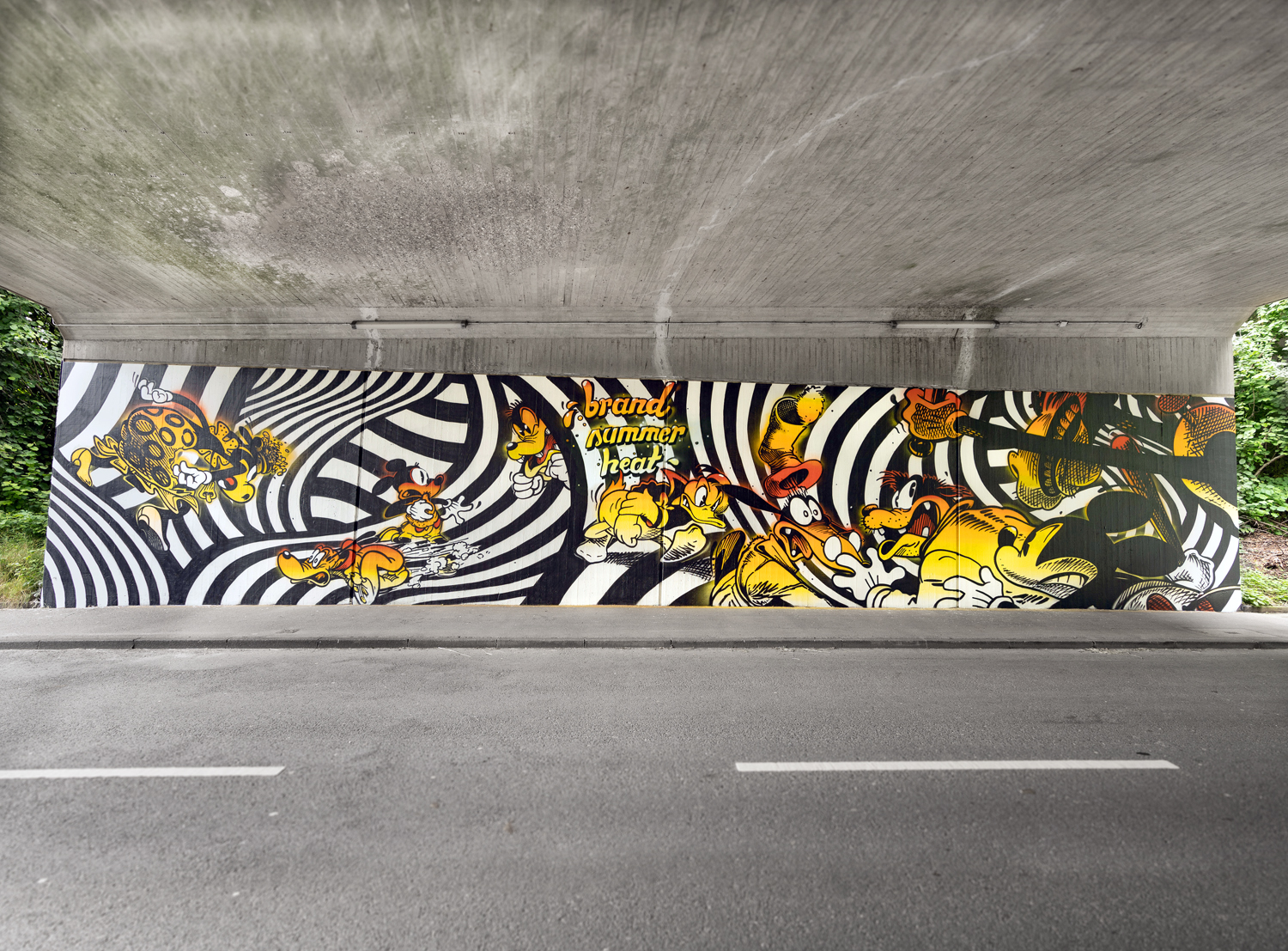
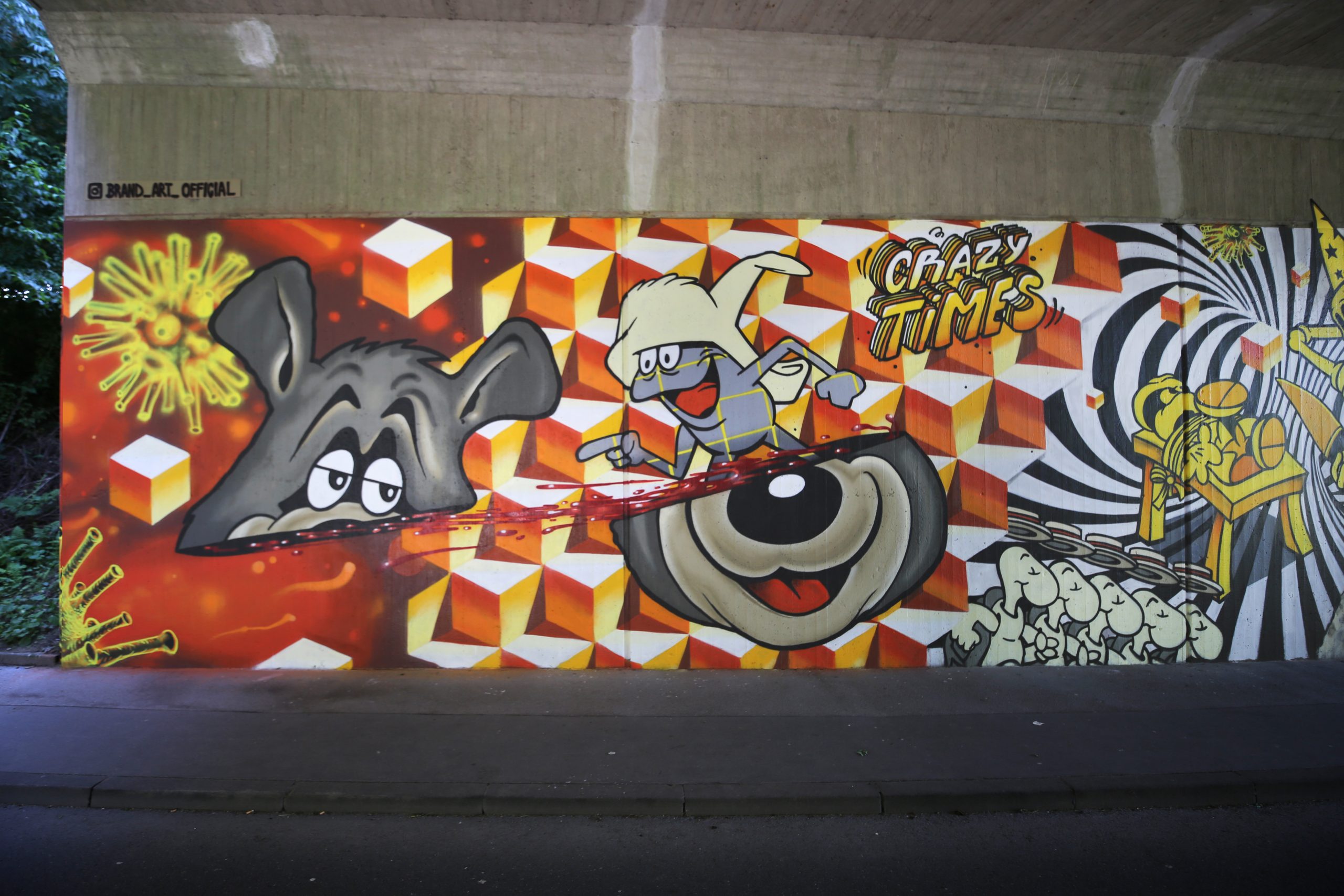
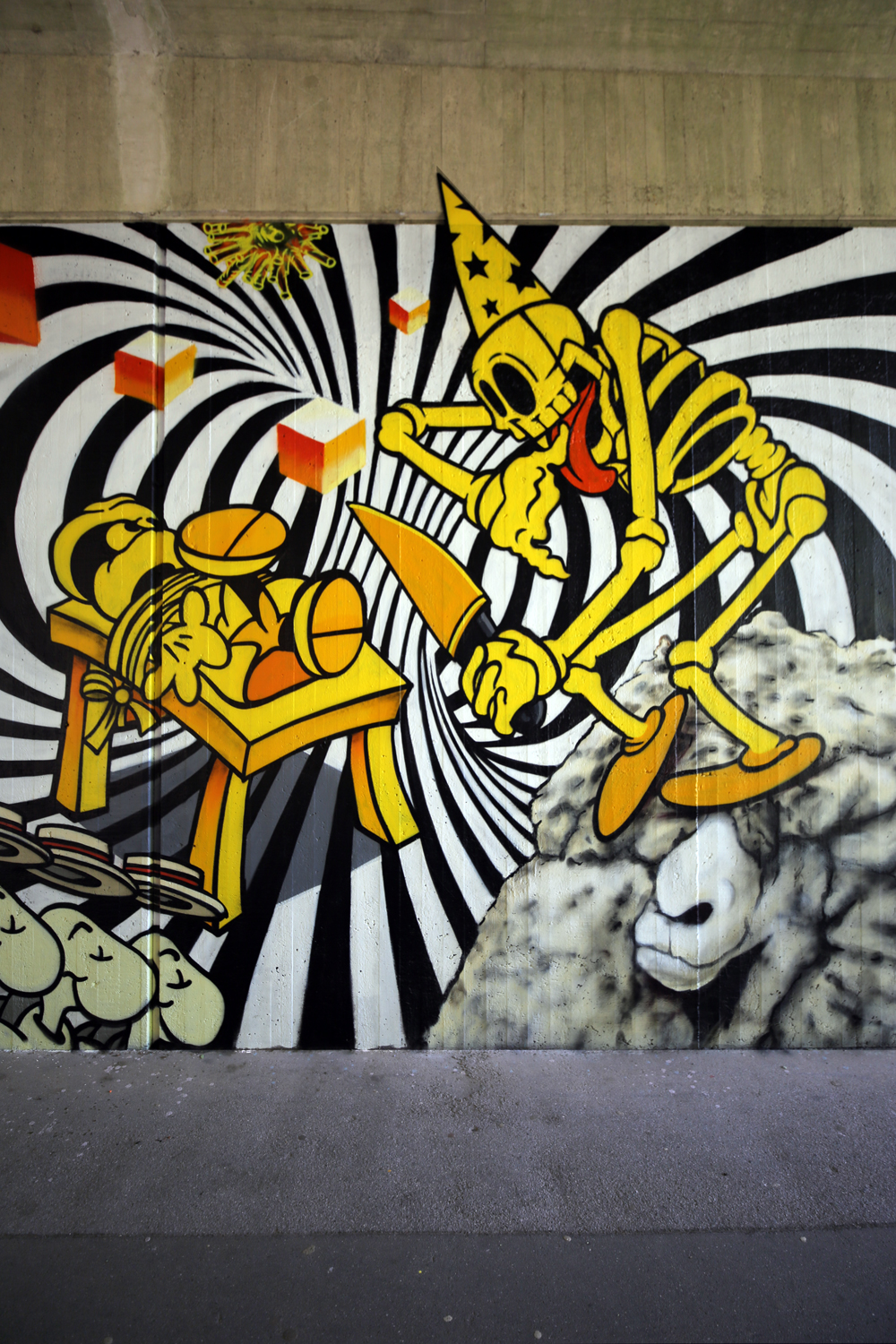
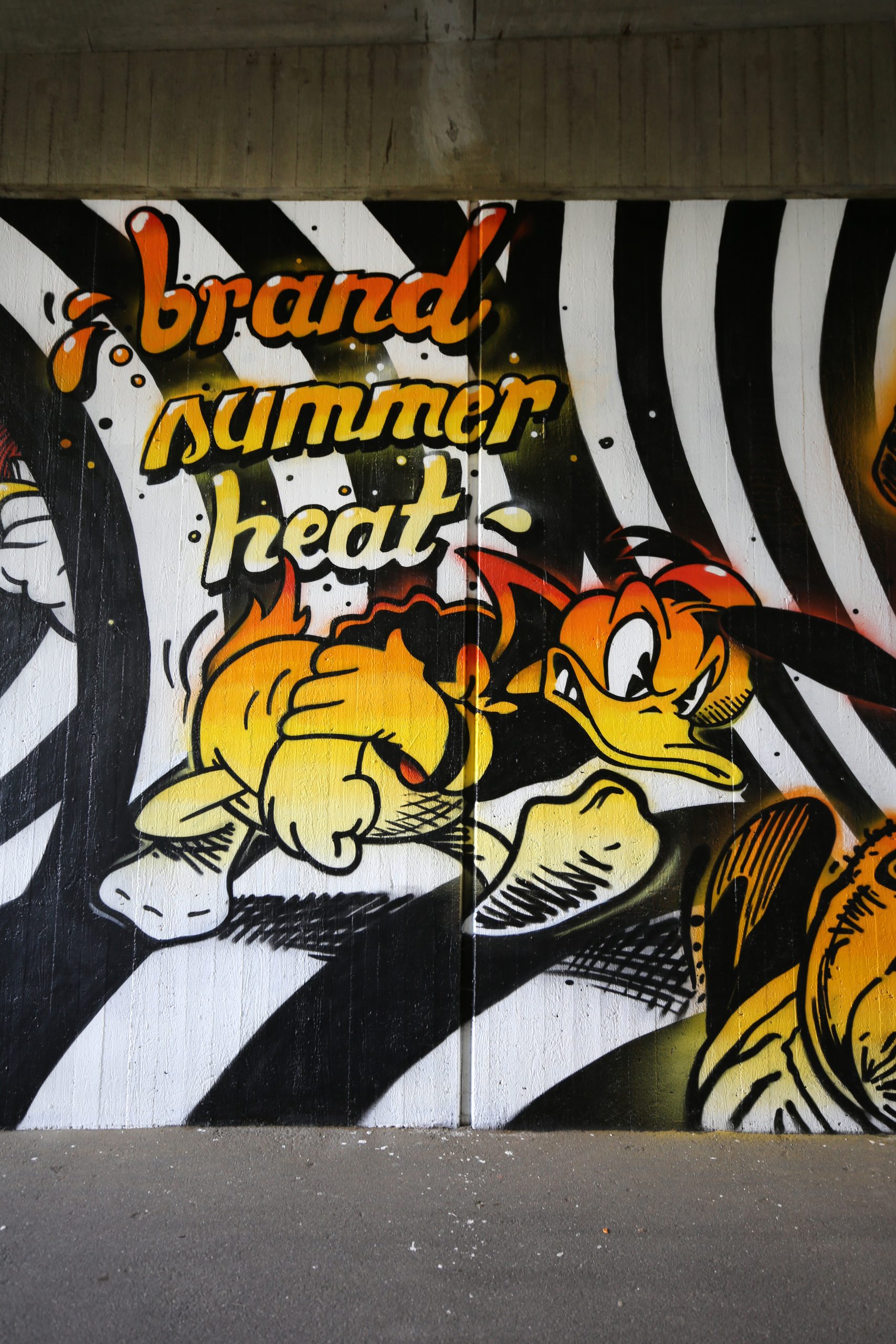
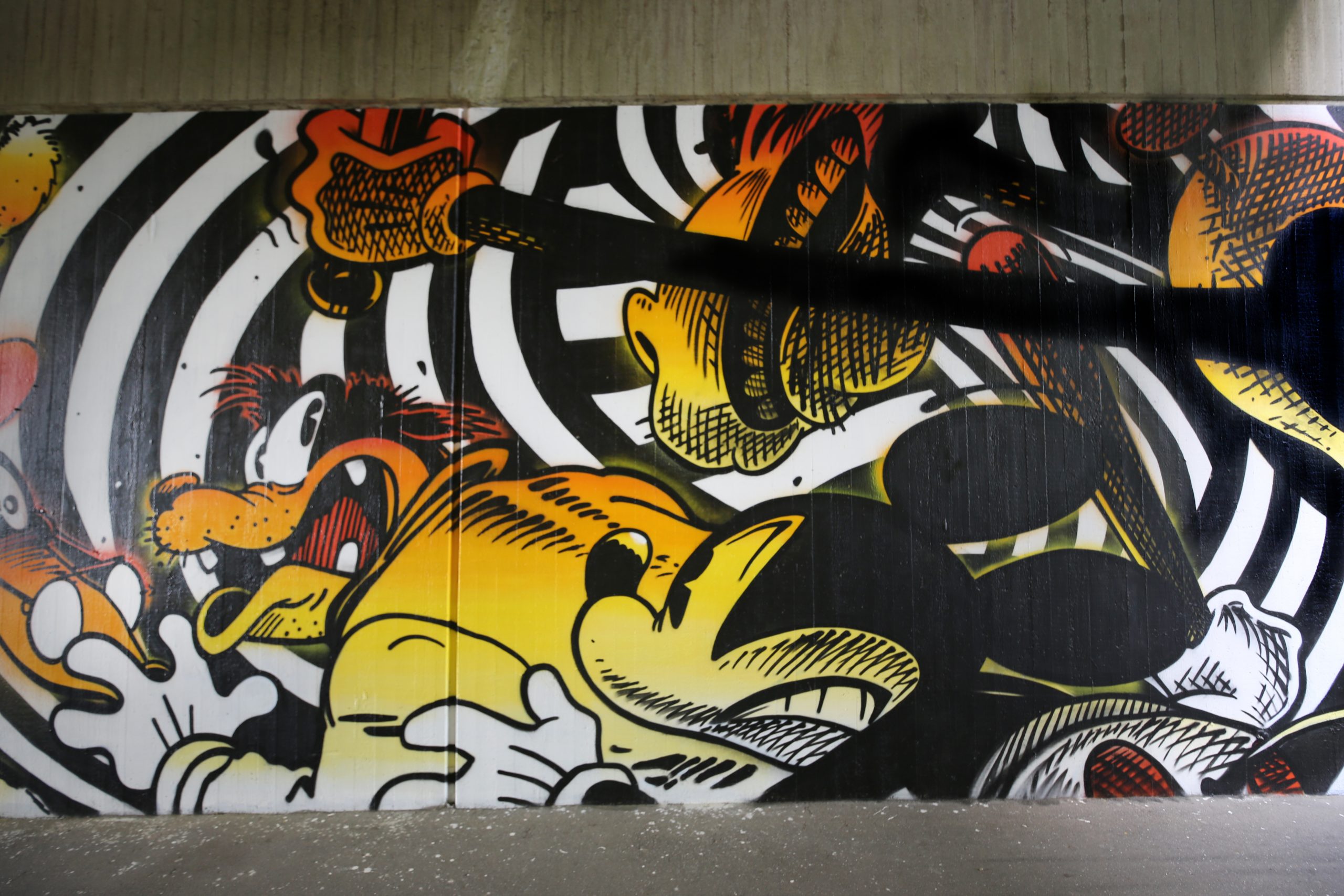
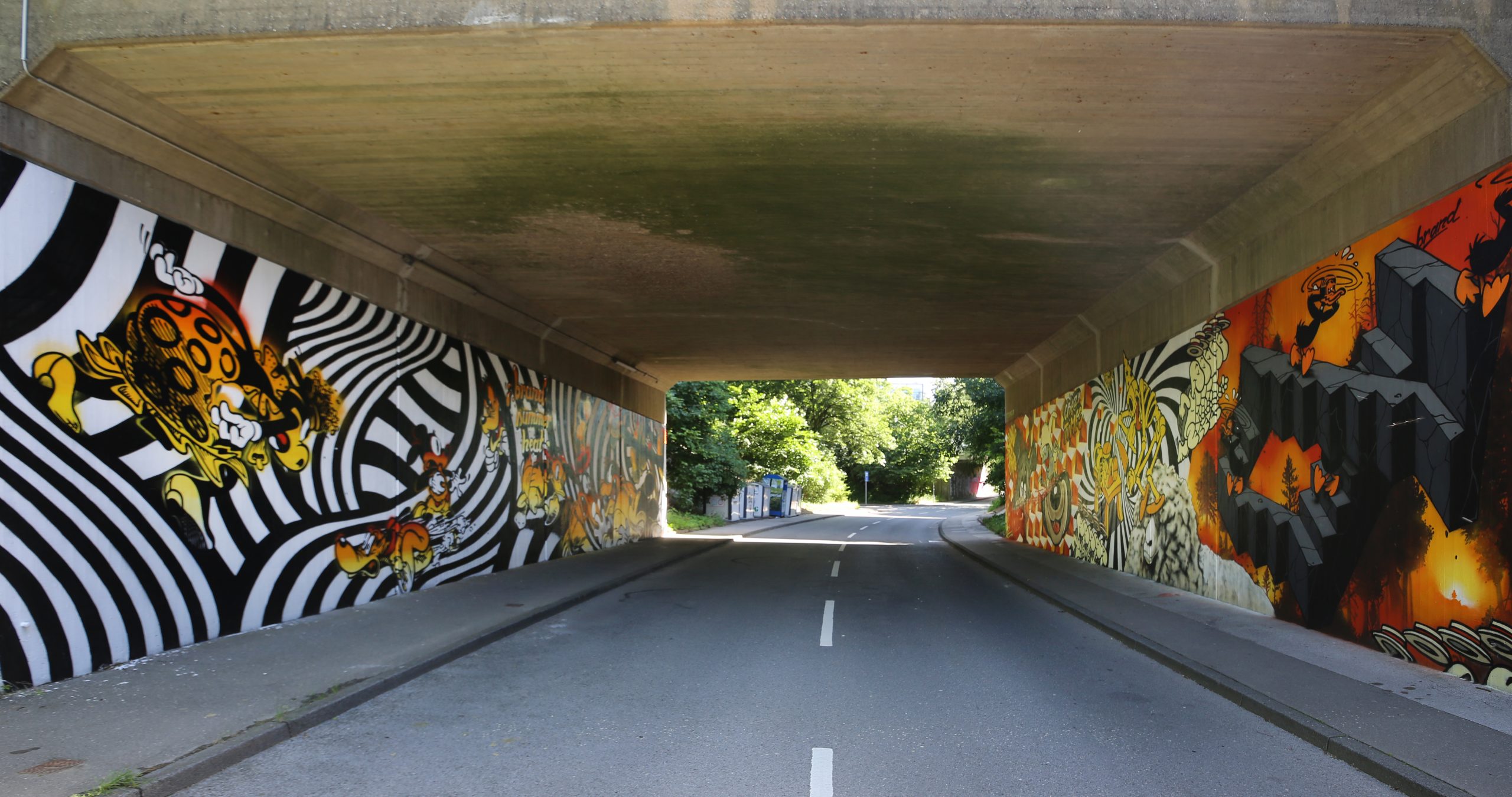
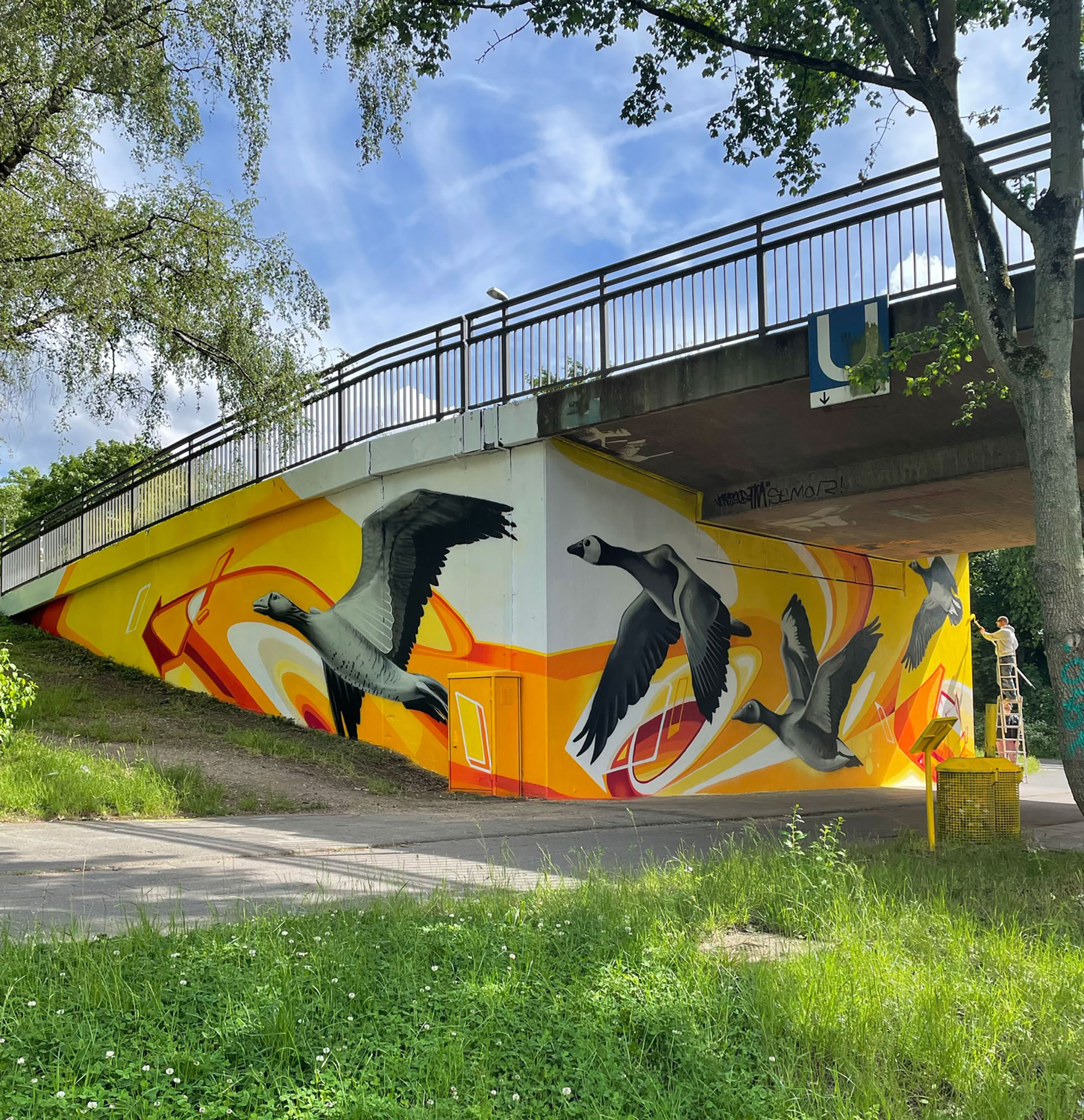
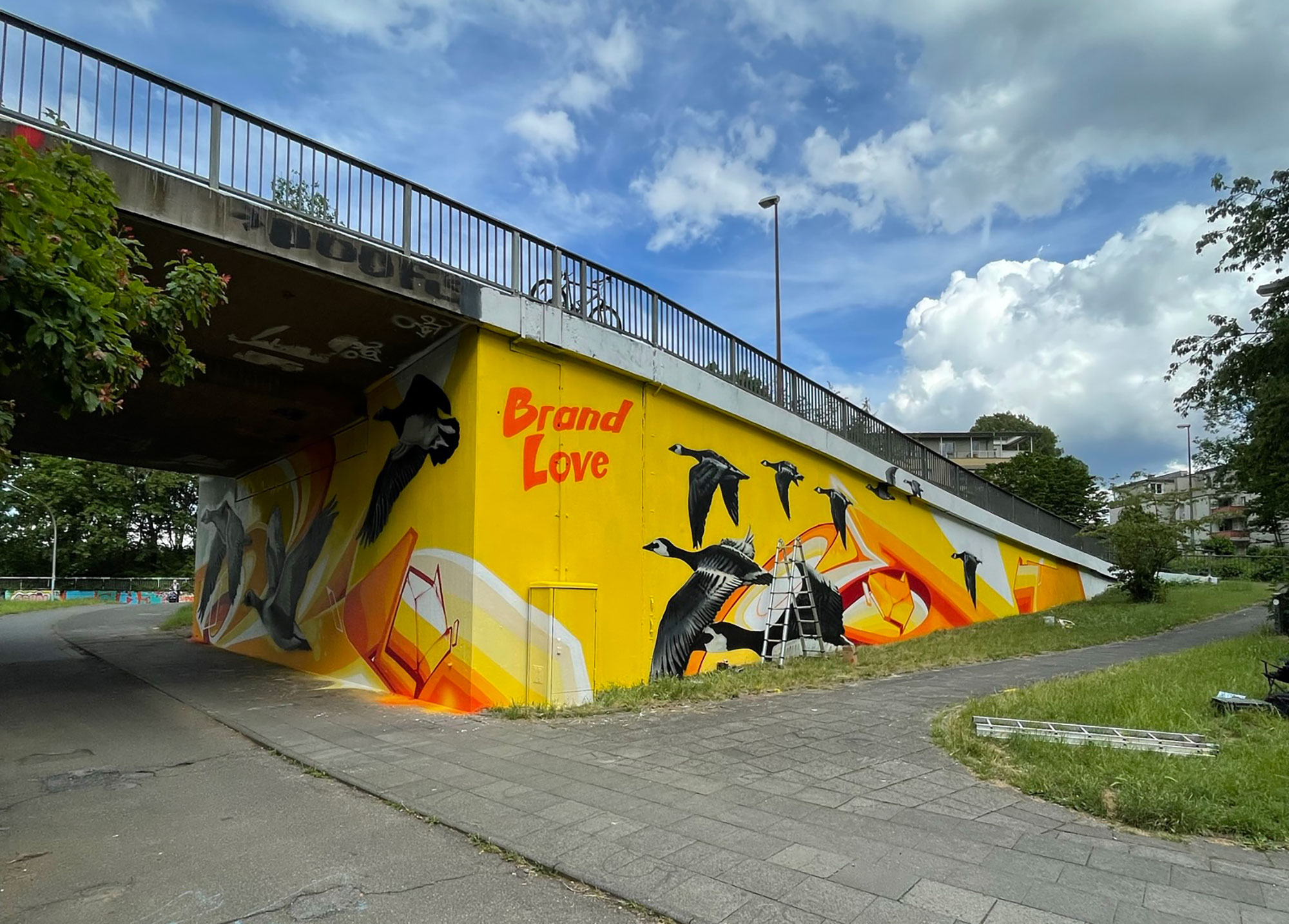
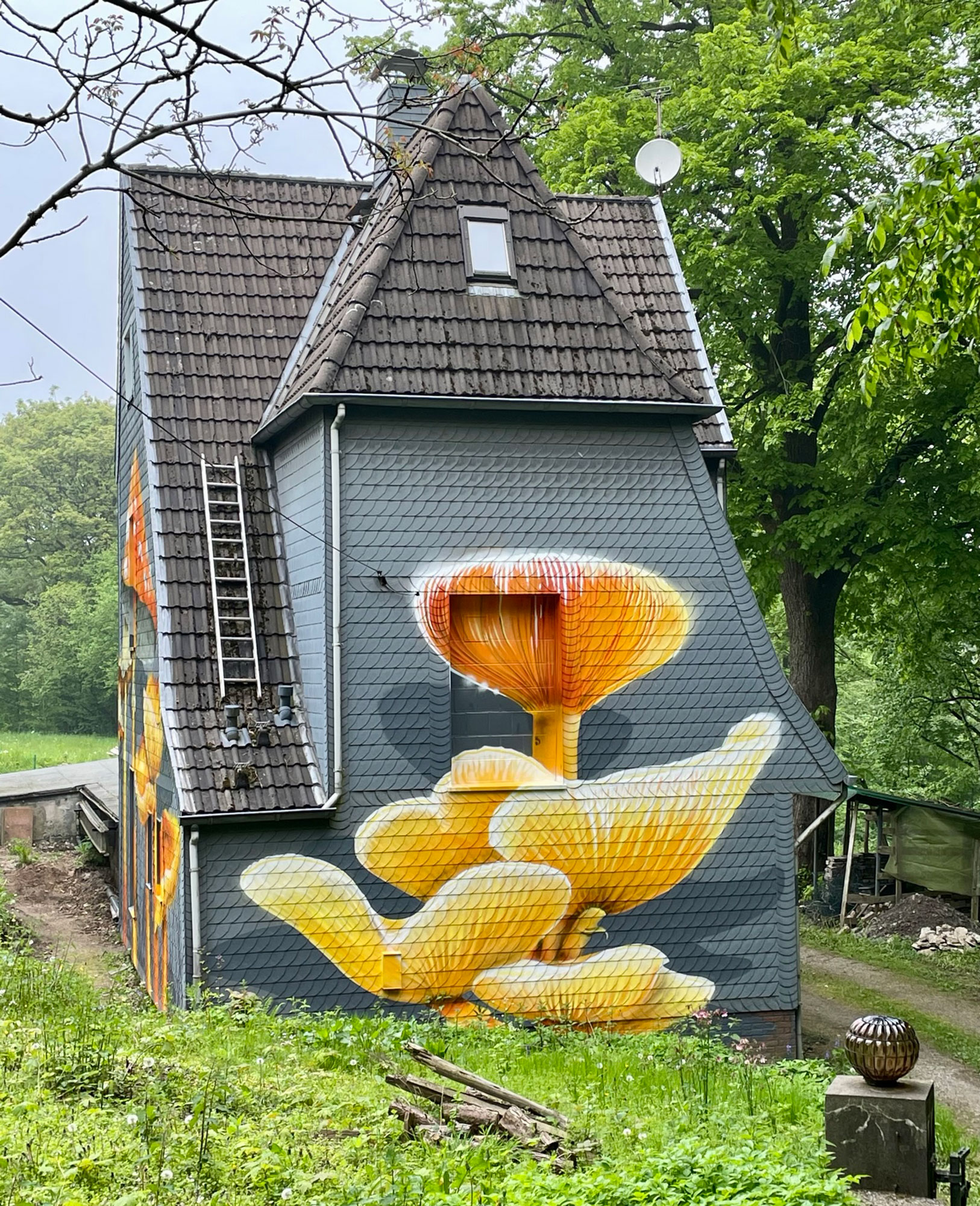
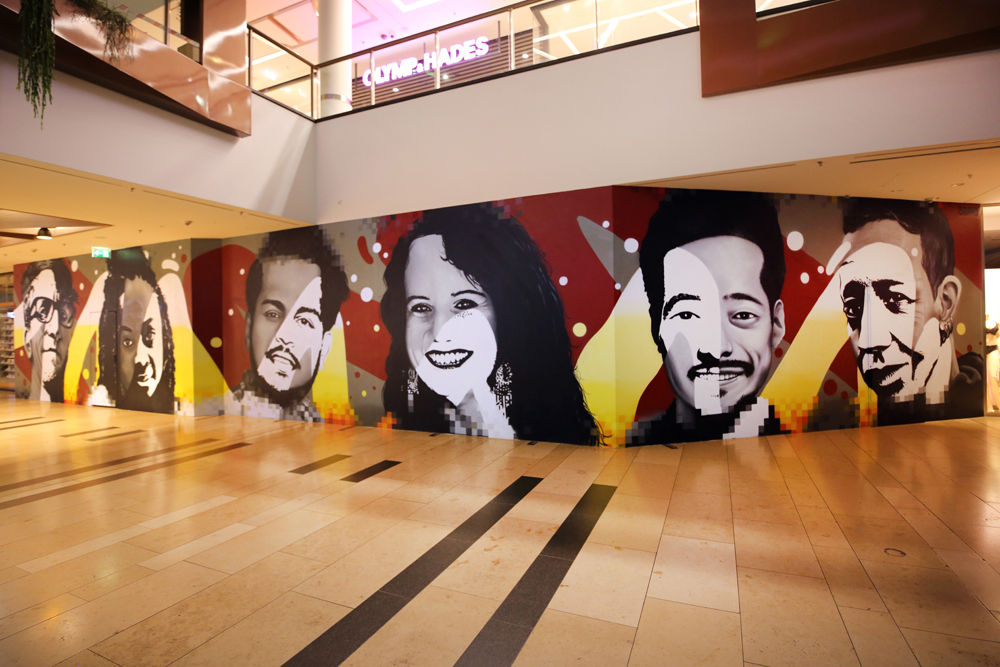
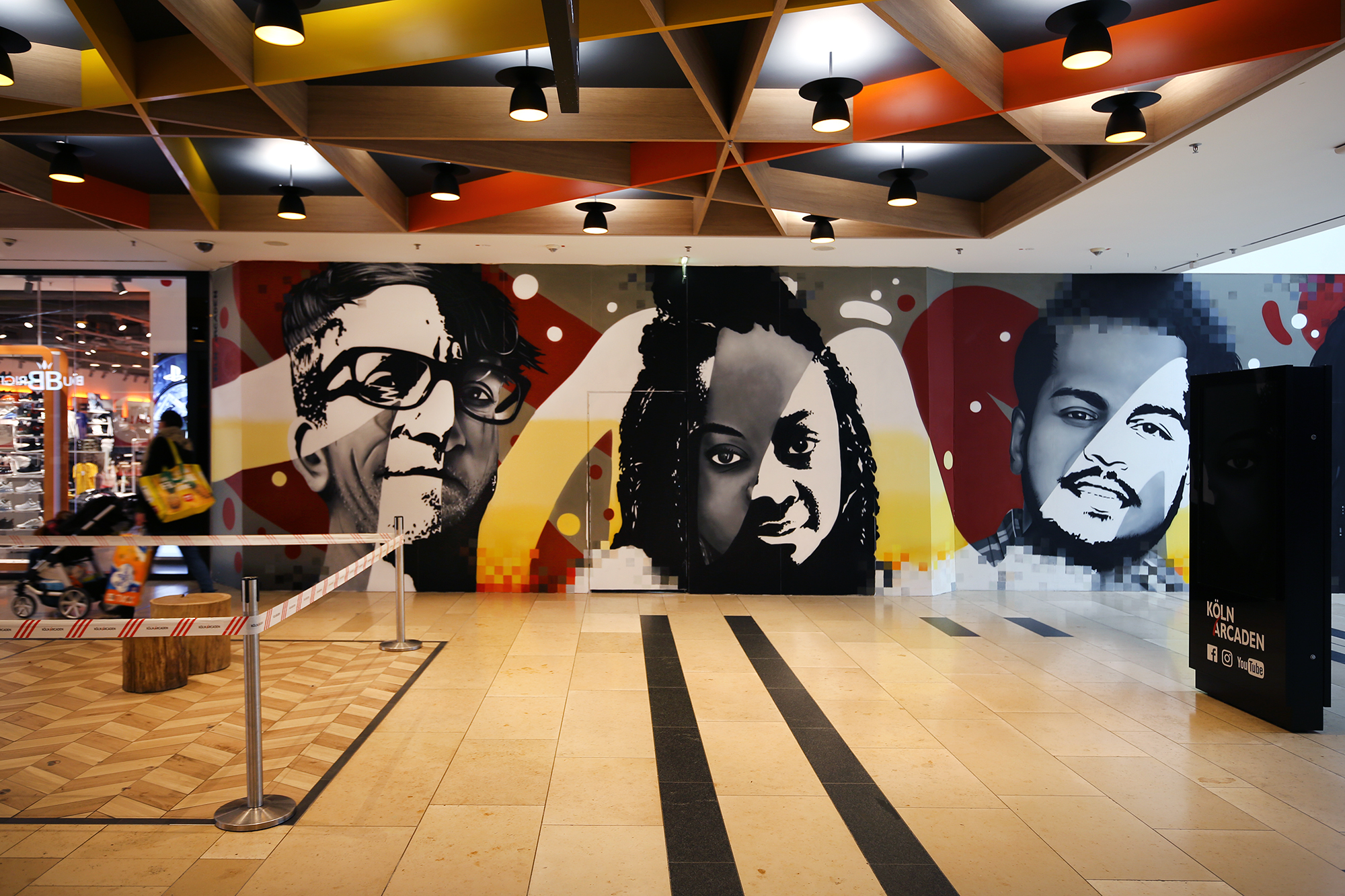
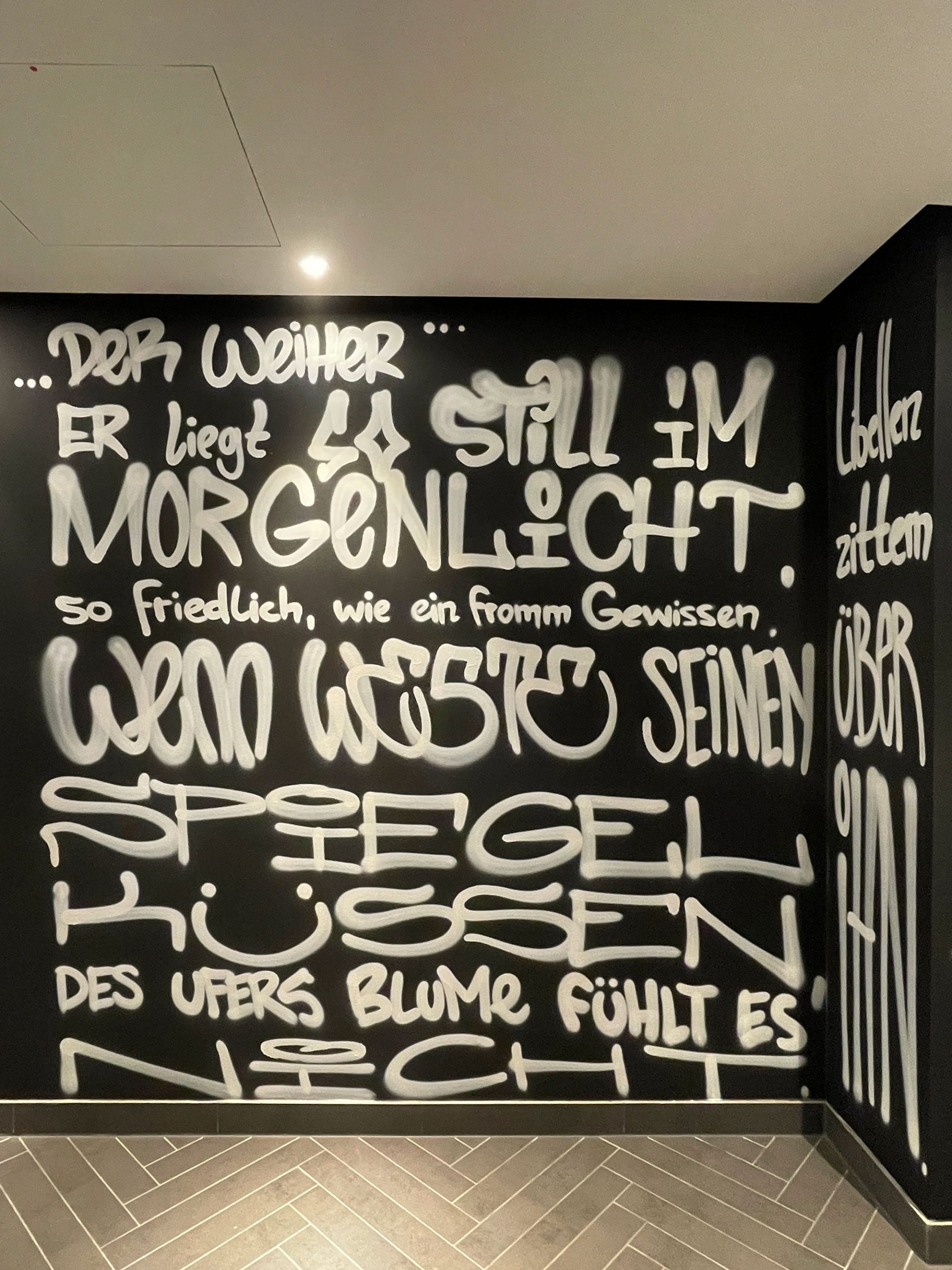
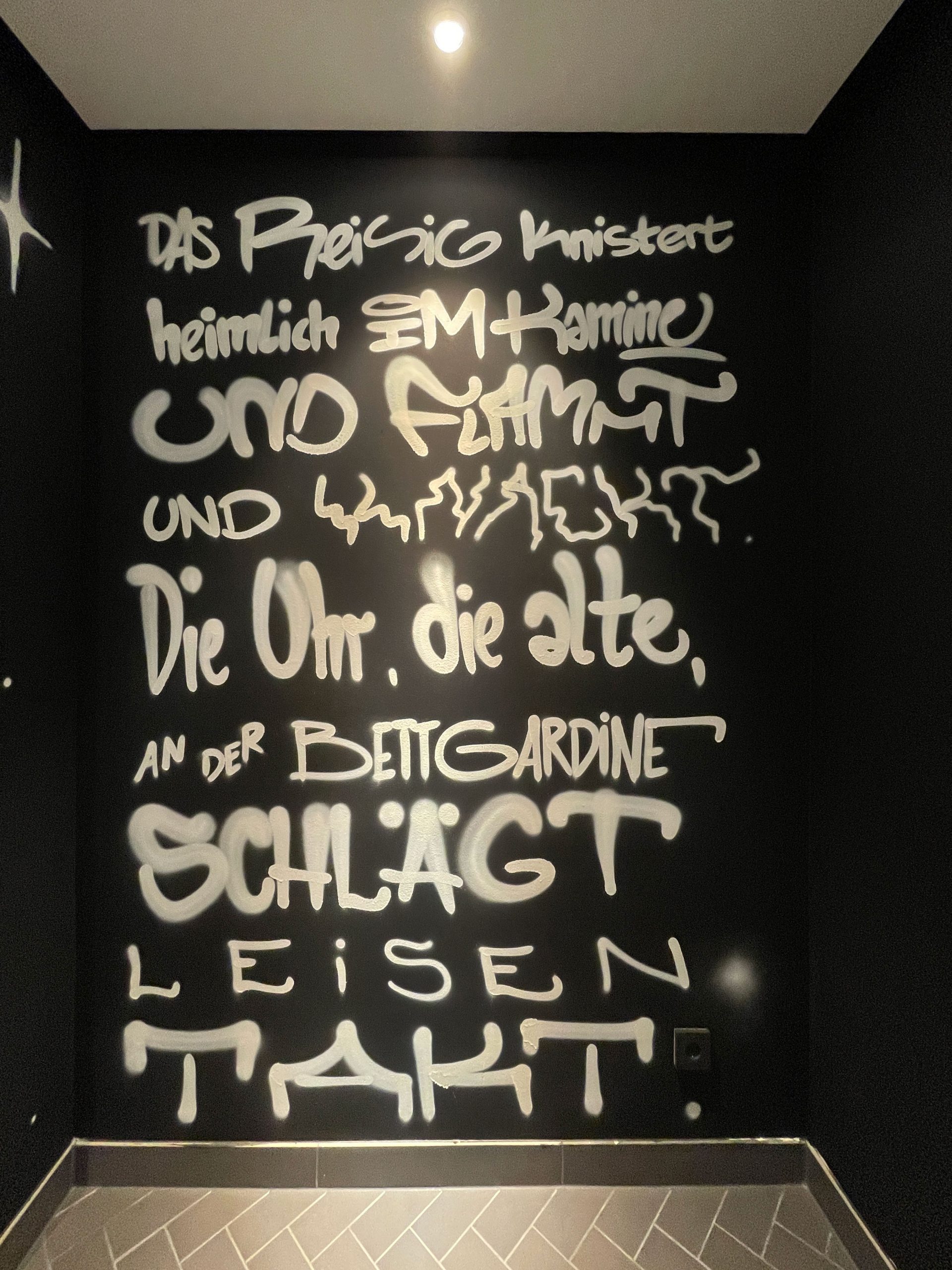
Later works intensify the dialogue with site. Motif, typography or spatial sequence follow the logic of the place — hall, bridge, facade, passage, interior. Scale varies widely. What remains constant is the question of how a visual language meets a specific context without erasing it — across facade design, public space and interior wall surfaces. The sequence closes in quiet, at interior scale.
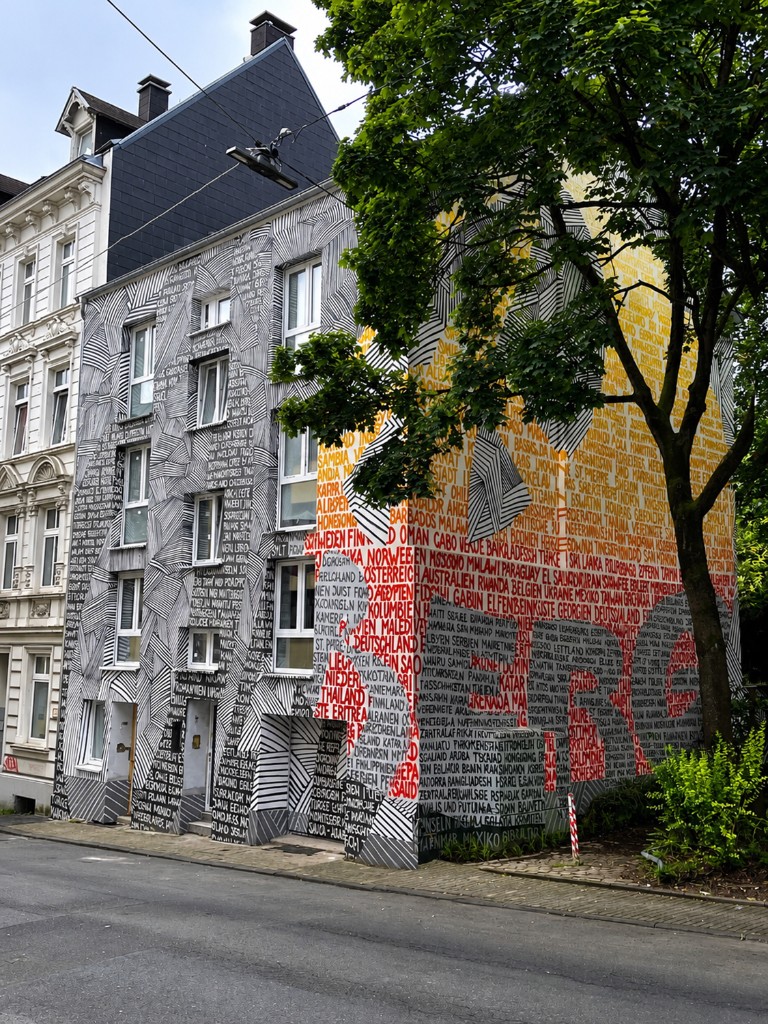
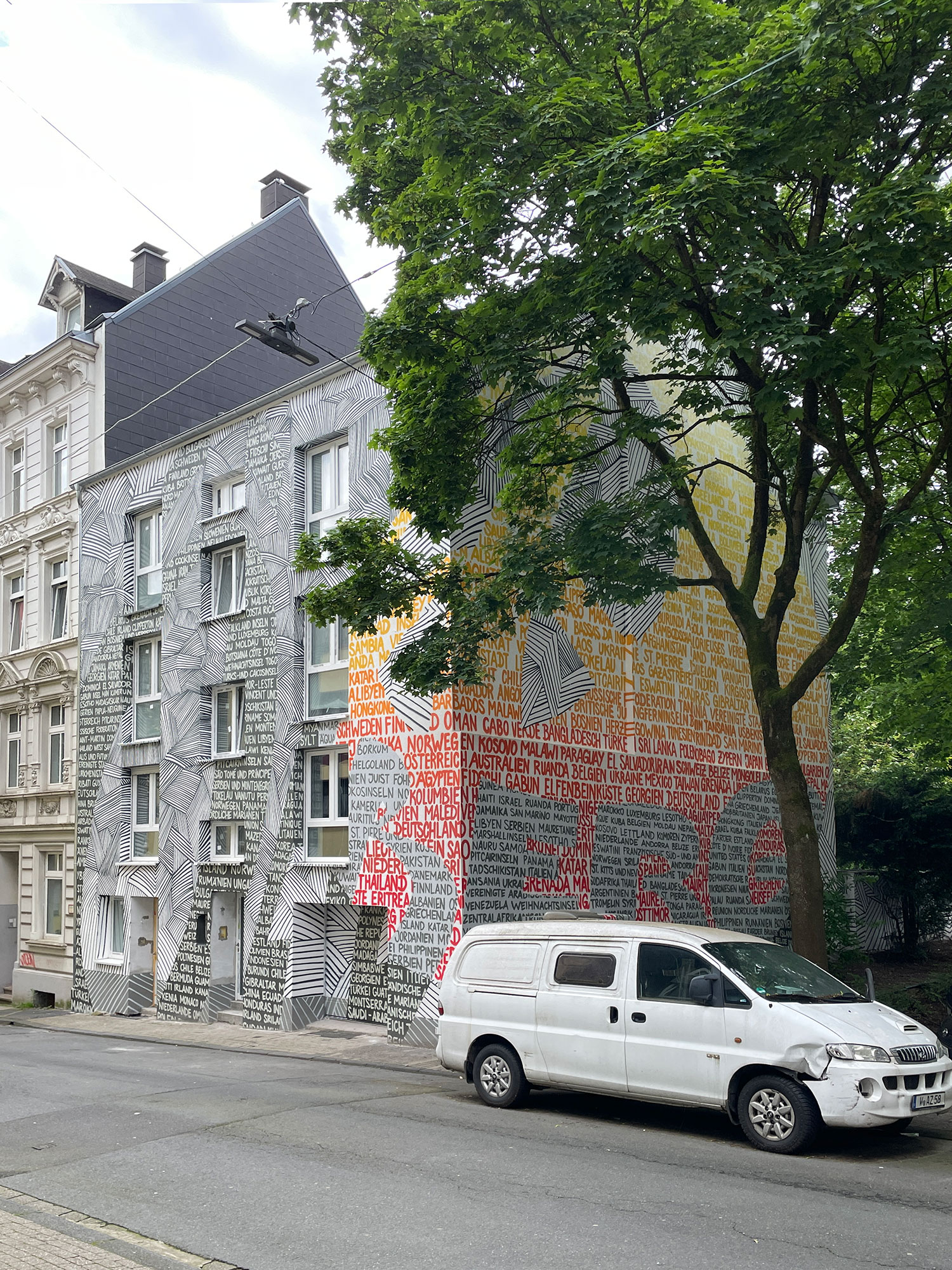
On a residential facade in the Ölberg district, country names become letterforms. Typography carries coexistence without leaving the architecture behind.